
Sustainable Freight Transport: Strategies and Solutions for More Efficient Logistics
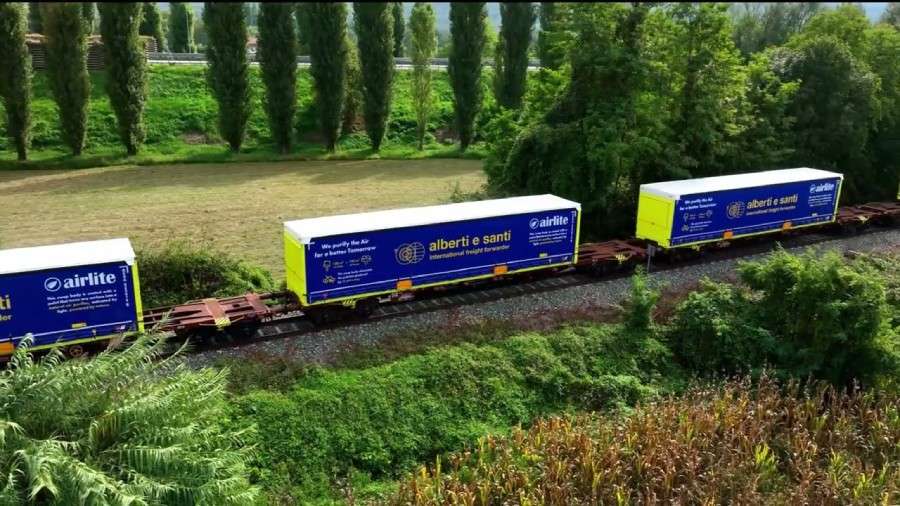
How sustainability is shaping the future of freight transport
In recent years, environmental sustainability has become one of the main drivers of change in the logistics and freight transport sector. Growing attention to reducing CO₂ emissions, European decarbonisation targets and the increasing focus on ESG criteria are transforming the way supply chains are designed and managed.
According to the latest report by the European Environment Agency, the transport sector continues to account for a significant share of the European Union’s greenhouse gas emissions. Although advances in vehicle technology and increasingly stringent environmental regulations have helped reduce several pollutants, freight transport still relies heavily on road transport, while demand for freight movement continues to grow.
Reducing the environmental impact of freight transport is a complex challenge because logistics must balance often competing priorities. On the one hand, businesses require fast, reliable and frequent deliveries; on the other, there is growing pressure to reduce emissions and make more efficient use of transport infrastructure. Sustainability therefore cannot be achieved through a single solution, but requires a combination of measures involving transport planning, modal choice, technological innovation and collaboration across the entire supply chain.
The issue is becoming increasingly important given that the transport system is one of the foundations of the European economy, enabling the daily movement of goods and supporting millions of businesses. Its strategic importance makes it one of the sectors where reconciling economic growth with environmental protection is most urgent.
European institutions are therefore promoting a transformation that goes beyond cleaner vehicles and embraces the entire logistics model. The objective is to build increasingly efficient supply chains capable of reducing emissions without compromising competitiveness, reliability or service quality.
Sustainable freight transport: a new approach to logistics planning
When discussing sustainable freight transport, the focus is often placed exclusively on low-emission vehicles or alternative fuels. In reality, sustainable logistics begins long before a vehicle sets off and involves every stage of transport planning.
Today, sustainability is considered a key design principle alongside operational efficiency, delivery reliability and cost control. Transport planning must therefore balance economic, operational and environmental considerations in order to identify the most suitable solution for every supply chain.
This integrated approach requires a comprehensive view of the supply chain, where every decision – from transport mode selection to distribution flows – contributes to the overall outcome. Sustainability is no longer an additional objective but a guiding principle for logistics planning.
For businesses, this means developing transport models that are more resilient, better able to adapt to changing markets, evolving regulations and customers’ increasing expectations regarding environmental performance throughout the supply chain.
Intermodal transport: one of the most effective ways to reduce environmental impact
Among the strategies currently available, intermodal transport is one of the most effective solutions for improving the sustainability of freight transport.
Intermodal freight combines different transport modes within a single shipment, making the most of the strengths of each. In particular, combining road freight transport with rail freight transport maintains the flexibility of road haulage for collection and final delivery while using rail for medium and long-distance routes, where significant environmental benefits can be achieved.
It is no coincidence that strengthening rail freight is regarded by European institutions as one of the main ways to reduce the environmental impact of logistics. Despite its considerable potential to lower emissions compared with road-only transport, the share of freight moved by rail remains below what existing infrastructure could support. As a result, the expansion of intermodal transport is now recognised as one of the most practical ways to accelerate the transition towards more sustainable freight mobility.
This operating model significantly reduces CO₂ emissions compared with transport carried out entirely by road, supporting both European and international decarbonisation objectives.
Intermodal transport also delivers benefits beyond environmental sustainability. It improves the reliability of freight flows, makes better use of transport infrastructure, reduces exposure to road congestion and creates more resilient supply chains.
For these reasons, intermodal transport is increasingly recognised as one of the key drivers of modern logistics, particularly for medium and long-distance domestic and international freight movements.
Road transport and intermodal transport: an integrated system
Talking about sustainability doesn’t mean pitting road transport against rail transport. On the contrary, developing sustainable logistics doesn’t depend on pitting road transport against rail transport, but on integrating them.
Road freight transport remains essential thanks to its flexibility, extensive geographic coverage and ability to support collection and final delivery operations.
Combined road-rail transport, on the other hand, delivers its greatest value on medium and long-distance routes, where it enables large freight volumes to be moved with a lower environmental impact.
Rather than replacing one transport mode with another, the objective is to design each shipment using the solution that best balances operational efficiency, economic performance and sustainability. This integrated approach is one of the defining characteristics of Alberti e Santi’s logistics services.
Logistics consultancy as a strategic advantage
Making freight transport more sustainable is not simply about choosing one transport mode over another. Every shipment has its own characteristics in terms of cargo type, destination, delivery times and transport volumes, all of which require careful planning. International shipments, in particular, involve multiple transport modes, operational procedures, regulations and delivery schedules that must be effectively coordinated.
In this context, the value of a logistics partner lies not only in organising transport but also in understanding each customer’s requirements and designing solutions that align operational, commercial and environmental objectives.
Sustainability therefore becomes the outcome of informed logistics planning, where every decision contributes to the overall efficiency of the supply chain while ensuring long-term operational continuity.
The future of sustainable logistics
The transformation of the logistics sector will continue over the coming years, supported by investment in infrastructure, technological innovation and new organisational models. The objective will not simply be to reduce the environmental impact of transport, but to develop logistics systems that are increasingly reliable, flexible and capable of responding to changing market conditions.
Alongside the continued growth of intermodal transport, investment in digital logistics, alternative fuels and advanced transport planning technologies is expected to accelerate. The aim is to progressively reduce environmental impact without compromising efficiency or service quality.
This vision is reflected in the United Nations Decade of Sustainable Transport (2026–2035), which encourages governments, businesses and logistics operators to work together to develop transport systems that are safer, more efficient and lower in emissions, supporting the Sustainable Development Goals of the 2030 Agenda.
For businesses, this means viewing logistics not simply as an operational cost, but as a strategic asset capable of creating value, improving environmental performance and strengthening competitiveness.
Alberti e Santi: a concrete commitment to sustainable logistics
The strategies driving the evolution of the logistics sector are reflected in the choices Alberti e Santi has been making for years to deliver freight transport solutions that are increasingly efficient and sustainable.
Investment in intermodal transport is one of the cornerstones of this commitment. In just five years, the company’s dedicated fleet has grown from around 100 swap bodies at the beginning of 2020 to more than 600 intermodal units in 2025, strengthening its ability to provide integrated road and rail freight transport services across key European routes, including the United Kingdom, Ireland, the Benelux countries and Poland.
This commitment is complemented by the Airlite® project, an innovative technology applied to 25 Alberti e Santi swap bodies that transforms treated surfaces into active air-purifying filters capable of reducing harmful gases and volatile organic compounds during transport operations. This initiative demonstrates the company’s determination to combine logistics investment with innovative environmental solutions.
Thanks to its extensive experience in domestic and international freight transport and its innovation-driven approach, Alberti e Santi supports businesses in developing tailored logistics solutions that improve supply chain efficiency, competitiveness and sustainability.
Would you like to develop a more efficient and sustainable transport strategy for your business? Contact the Alberti e Santi team to find the logistics solution that best meets your requirements.