
Intermodal freight: the benefits and opportunities of combined transport
Why businesses choose intermodal transport
In recent years, the logistics and transport sector has undergone a significant transformation. Businesses face new challenges related to rising operational costs, the need to optimise supply chains, and growing pressure to reduce environmental impact. In this context, intermodal transport offers a concrete response: a strategic solution that combines efficiency, flexibility, and sustainability without compromising operational continuity.
By integrating different modes of transport — in particular road and rail — combined transport makes it possible to improve the management of logistics flows, optimise delivery times, and reduce the costs associated with moving goods over medium and long distances.
For businesses operating at national and international level, working with an experienced operator in combined transport means having access to a structured, reliable service focused on operational continuity: three factors that make a real difference when handling large volumes or frequent shipments.
What is intermodal transport
Intermodal transport is a logistics system that uses two or more different modes of transport to move goods within a single, organised flow. The modes involved can include trucks, trains, and ships, integrated to ensure operational continuity and optimised routing.
One of the most important aspects of intermodality is that the goods are not handled directly when transferring from one mode to another. The load remains within the same transport unit – such as containers, swap bodies, or semi-trailers – reducing handling times, the risk of damage, and operational complexity.
This approach provides a continuity of movement that is particularly advantageous for businesses managing frequent shipments or large volumes of goods.
When the main leg of the journey is carried out by rail or sea, whilst road transport is used only for the first and last miles, the more precise term is combined transport.
How road-rail combined transport works
In road-rail combined transport, trucks are used for collecting goods from the company’s warehouse and for final delivery to the destination. The longer leg is handled by rail, which makes it possible to optimise lead times, costs, and environmental impact.
This logistics model allows the strengths of both modes to be fully exploited. Road freight offers high flexibility and speed for local deliveries, whilst rail freight provides greater load capacity and efficiency over long distances.
For many businesses — particularly those operating across Europe — this integration represents a significant strategic advantage. Reducing dependence on road haulage means improved delivery stability and fewer delays caused by congestion, road restrictions, or driving time limitations.
A further benefit that is often overlooked relates to operational predictability. Rail freight is not subject to the restrictions that apply to heavy goods vehicles — weekend driving bans, night-time limitations, or disruptions caused by adverse weather conditions — which are a constant variable in road transport planning. For businesses that need to meet precise delivery windows, this translates into greater lead time stability and more reliable planning across the entire supply chain.
The main benefits of intermodal transport
Reduced logistics costs
One of the primary benefits of intermodal transport is the potential to reduce logistics management costs, particularly on medium and long-distance routes.
For many businesses, transport is one of the most significant cost items within the supply chain. Road-rail combined transport makes it possible to reduce costs associated with fuel, motorway tolls, and fleet management.
Rail freight also allows large volumes of goods to be moved with greater energy efficiency compared to road-only transport. This enables businesses to maintain high operational standards whilst improving their overall competitiveness.
A more efficient logistics setup also delivers greater cost predictability and better shipment planning, both essential factors for businesses seeking to optimise resources and operational lead times.
Improved environmental sustainability
Sustainability is now a central element of corporate strategy and supply chain management. For this reason, combined transport is an increasingly sought-after solution for businesses looking to reduce their environmental footprint without compromising operational efficiency.
According to industry estimates, rail freight produces on average 70–80% less CO₂ than equivalent road transport — a significant gap that has led the European Union to incentivise modal shift towards rail and inland waterways as part of the Green Deal and the European Sustainable Mobility Strategy. Beyond emissions reductions, cutting the number of kilometres driven on roads also helps to contain traffic, energy consumption, and air pollution along the logistics corridors that pass through urban and peri-urban areas.
Choosing an intermodal logistics model therefore means investing in a more responsible supply chain, in line with ESG objectives and with the increasingly stringent environmental reporting requirements imposed by customers, investors, and European regulations.
In addition to the direct environmental benefits, businesses can also gain a competitive advantage on the reputational front: more and more clients and commercial partners prioritise suppliers who can demonstrate, with concrete data, a genuine commitment to reducing the impact of their logistics chain.
Greater efficiency and reliability
In the transport sector, punctuality and operational continuity are fundamental factors in delivering an efficient, competitive service.
Intermodal transport improves shipment planning and reduces the impact of road traffic disruptions or road network limitations. Through rail freight, businesses can benefit from more stable and regular connections, particularly over long distances.
The integration of road and rail also makes it possible to optimise lead times, resources, and distribution capacity. For businesses, this means greater control over goods flows and better overall supply chain organisation.
Cargo security
A further advantage of intermodal transport relates to the safety of goods throughout all stages of transit.
Since the load remains within the same transport unit for most of the journey, manual handling operations are reduced and, consequently, so is the risk of damage, loss, or tampering.
The use of standardised containers, swap bodies, and semi-trailers also ensures more efficient shipment management.
For businesses, this translates into greater service reliability and better protection of the value of the goods being transported.
The strategic opportunities of intermodal transport for businesses
Whilst the benefits described so far relate primarily to short-term operational efficiency, the opportunities offered by intermodal transport have a more strategic, long-term dimension.
Modal integration enables businesses to build a structurally more resilient supply chain: one that is less exposed to the disruptions of road transport, better able to absorb demand peaks, and less vulnerable to fuel cost fluctuations. In an increasingly unstable market environment, this structural stability represents a competitive advantage that is difficult to replicate through road-only transport.
In terms of accessibility, the development of rail infrastructure and intermodal terminals across Europe has significantly lowered the barrier to entry for these services. Today, even small and medium-sized enterprises can integrate combined transport into their logistics operations without having to manage the operational complexity directly, by working with specialised operators who coordinate the entire chain.
Finally, intermodal transport opens concrete opportunities to access new European markets through established rail routes, reducing the cost of reaching destinations where road freight would be less competitive or more subject to local regulatory restrictions.
Intermodal transport as a strategic choice
In an increasingly competitive, sustainability-driven market, intermodal transport is no longer a niche alternative to conventional transport: it has become a structural element in the logistics strategy of businesses seeking to control costs, reduce their environmental impact, and build a more stable, predictable supply chain.
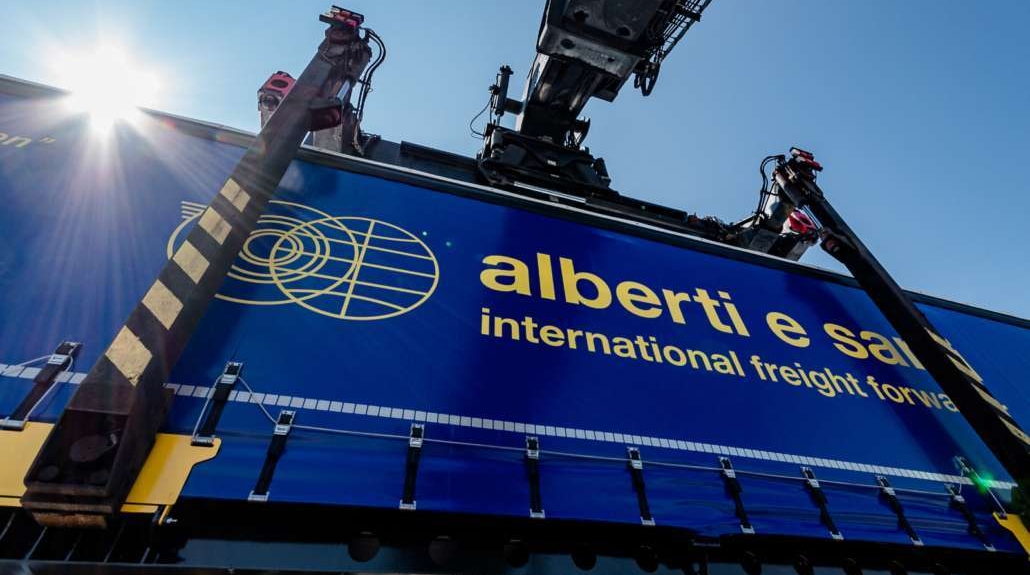
Alberti e Santi has been operating in intermodal transport for over thirty years, with a network of road and rail services connecting major European destinations with dedicated solutions for every shipping need. Among the most established routes are connections to the United Kingdom, Ireland, and Benelux, areas where we operate frequently and consistently: a real advantage especially for shipments to the UK, where post-Brexit customs management requires experience and robust processes.
Would you like to assess whether intermodal transport is the right choice for your business? Contact us for an analysis of your logistics flow.