
Customs bonded warehouse and customs assistance: a strategic service for importer/export
The strategic role of customs in the global economy
In an increasingly complex international trade environment, efficient customs management has become an essential competitive advantage for businesses operating in global markets. Customs assistance and customs bonded warehousing are not mere bureaucratic requirements: they are strategic tools that directly impact a company’s liquidity, operational efficiency, and overall competitiveness in import and export activities.
Those who manage cross-border goods flows know all too well how customs can be either a bottleneck or an opportunity. The difference lies in the approach: working with a structured operator such as Alberti e Santi – with consolidated expertise and dedicated infrastructure – means making full use of the instruments provided by European customs legislation and turning a regulatory obligation into a concrete competitive advantage.
What is customs assistance and why does it matter?
Customs assistance encompasses the full range of support, advisory, and operational activities carried out on behalf of businesses that import or export goods. In practice, it covers everything related to interaction with customs authorities: from the tariff classification of goods to the preparation and submission of customs declarations, document verification, and the management of any inspections or controls.
A structured customs assistance service delivers:
- Regulatory compliance: customs procedures are governed by EU regulations that are constantly evolving. An error in classification or documentation can result in delays, penalties, or seizure of goods.
- Faster customs clearance: reliable, reduced lead times make a real difference in the supply chain, particularly in time-sensitive sectors.
- Cost optimisation: in-depth knowledge of exemptions, reliefs, and special customs procedures can significantly reduce the overall fiscal and financial burden.
- Risk management: qualified support reduces exposure to errors, disputes, and border delays.
The quality of a customs assistance service is ultimately measured by its ability to simplify complexity for importers and exporters, turning every shipment into a smooth, predictable process.
The customs bonded warehouse: an underrated tool
Among the most powerful and strategic customs instruments available, the customs bonded warehouse deserves particular attention. This is a facility — public or private — where goods arriving from non-EU countries can be stored without payment of customs duties and VAT, until they are released into free circulation or assigned to another customs procedure.
In other words, the customs bonded warehouse allows the moment of duty payment to be deferred, with a direct and significant impact on the company’s financial management.
How a customs bonded warehouse works
Goods enter the customs bonded warehouse under a suspensive procedure: they remain under customs supervision without the importer being required to pay duties and VAT until the goods are released. Whilst in storage, goods may undergo standard handling (repackaging, labelling, sampling), but not processing that substantially alters their nature.
Once the importer decides to release the goods, several customs destinations are available:
- Release for free circulation within the EU market, with duties and VAT settled at the point of release.
- Re-export to third countries, with no customs duties applied.
- Transit to other Member States, under suspensive arrangements.
- Assignment to another special customs procedure, such as inward processing.
Customs bonded warehousing for importers: tangible benefits
Customs bonded warehousing is one of the most widely used and advantageous tools for businesses trading with non-EU markets. For companies importing large volumes of goods from Asia, the Americas, or the Middle East, the ability to defer VAT and duty payments represents a very concrete financial advantage.
Suspended VAT and improved liquidity
One of the primary benefits relates to the management of VAT and duties. Without this facility, the importer must pay VAT upon custom clearance, even if the goods have not yet been sold. With a customs bonded warehouse, payment is deferred until the goods are actually released for consumption, resulting in improved business liquidity and a reduced working capital requirement.
Optimising warehouse flows
A customs bonded warehouse allows large quantities of goods to be received, stored, and progressively released to the market, with duties paid only on the quantities actually entering free circulation — including in separate, staggered batches. This approach is particularly effective for businesses managing seasonal supply or seeking to maintain continuity of supply without the burden of advancing large sums to the tax authorities.
Flexibility in import and export strategy
Businesses operating in both importation and exportation can use a customs bonded warehouse as a flexible logistics hub: goods can be received, stored, and then directed to the domestic market or exported to third countries, optimising the most advantageous option based on market conditions and actual demand.
Customs assistance and bonded warehousing: an integrated approach
The real strategic value emerges when customs assistance and the customs bonded warehouse are managed as a single, coordinated system. Separating the two functions – entrusting goods storage to one operator and customs procedures to another – inevitably generates duplication, waiting times, and the risk of documentary misalignment.
An integrated service, by contrast, allows full coverage of the goods cycle, from storage through to release:
- Analysis of import flows and identification of the most advantageous customs procedures based on the type of goods and their final destination.
- Storage under VAT and duty suspension at authorised private customs bonded warehouse facilities, in full compliance with the requirements of the competent Customs Office.
- End-to-end document management: from the declaration placing goods under the warehousing procedure through to release for free circulation, re-export, or transit to other Member States.
- Customs procedures for both import and export from and to non-EU countries, including tariff classification, customs value determination, and document verification.
- Advisory on applicable reliefs: preferential tariff rates, exemption schemes, and free trade agreements that can reduce the overall tax burden.
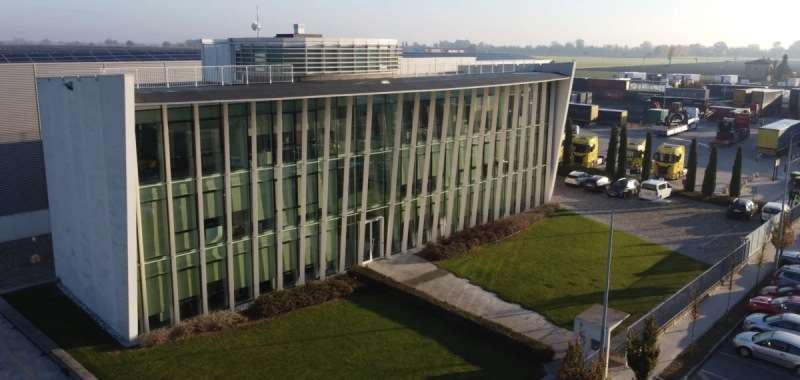
This is the operational model that Alberti e Santi applies through its private customs bonded warehouse in Cortemaggiore, where customs assistance and warehousing are managed in a coordinated way by a single operator.
Customs in international trade: most common operational challenges
Businesses managing international goods flows are well aware of the customs-related difficulties that can slow down import and export operations or generate unexpected costs:
- Incorrect tariff classification: assigning the wrong CN code (Combined Nomenclature) can result in incorrect duties being applied and disputes during audits.
- Incomplete or non-compliant documentation: commercial invoices, packing lists, certificates of origin, and licences must all be in order prior to customs clearance.
- Incorrect customs value calculation: the taxable base on which duties and VAT are calculated must be determined according to precise, up-to-date criteria.
- Lack of awareness of trade policy measures: anti-dumping duties, safeguard measures, and import restrictions can change frequently and catch businesses off guard.
- Licence and authorisation management: certain categories of goods require specific licences or certifications before they can be cleared through customs.
Customs documentation: what you need to know
One of the most critical aspects of managing customs procedures is the correct preparation of the required documentation. Depending on the type of goods, country of origin, and destination, the required documentation may include:
- VAT regulations and intra-Community transactions: VAT management varies based on the customs regime applied and the nature of the transaction – direct import, triangular transaction, or intra-Community supply. Understanding the applicable rules prevents errors that can lead to disputes during a tax audit.
- Customs classification and duty optimization: Assigning the correct tariff code is not only a regulatory requirement, but can significantly impact the overall duty burden. Optimized classification, in compliance with the regulations, allows you to take advantage of preferential rates and free trade agreements.
- Phytosanitary certifications (Italy, EU, UK): For goods of plant or animal origin, phytosanitary certifications are a mandatory requirement and vary depending on the country of destination. The UK market, in particular, has adopted its own post-Brexit control procedures, distinct from those of the EU.
- ATA Carnet and special declarations: For temporary shipments—commercial samples, trade fair equipment, professional materials – the ATA Carnet simplifies customs formalities by eliminating the payment of duties and guarantees in countries participating in the convention.
- Licenses, authorizations, and consular procedures: Some product categories require import or export licenses, consular visas, or certificates of conformity specific to the country of destination. Managing these requirements requires up-to-date knowledge of local regulations and authorization issuance times.
A structured customs assistance service can pre-assess the required documentation for each shipment, reducing the risk of holdups and ensuring operational continuity.
Customs as a strategic asset: the role of Alberti e Santi
In an increasingly competitive international trade landscape, the ability to manage customs processes efficiently is a real advantage. The customs bonded warehouse — particularly for importation — enables businesses to improve their financial position, increase operational flexibility, and reduce risk exposure. Quality customs assistance is the prerequisite for making the most of these opportunities: technical expertise, regulatory knowledge, and integration with the company’s logistics processes are what transform customs from a compliance burden into a strategic lever for import and export operations.
Alberti e Santi responds to this need by offering businesses a comprehensive range of customs assistance and a private customs warehouse: an operational and certified facility that manages storage, import and export customs procedures, and customs consultancy as a single, coordinated process.
Would you like to find out how to optimise your customs flows? Contact us for a personalised consultation.